
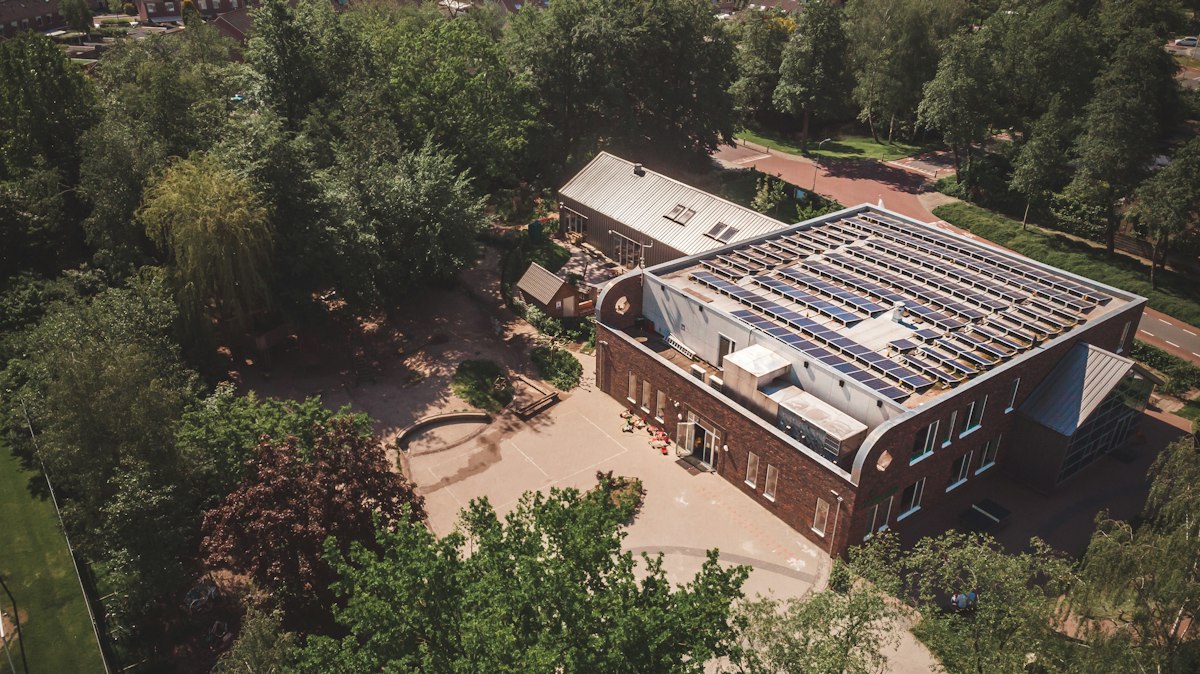
Solar and battery storage are often considered together for commercial buildings, but there is no standard solar-to-battery ratio that works across every site. The right system depends on how the building actually uses energy, what can be generated, what can be exported and what the battery is expected to do.
Solar does not fail. Poorly matched solar does.
Solar PV creates value when generation is matched well to the site’s demand. A warehouse, office, hotel or manufacturing facility can have a very different load profile even when the buildings look similar from the outside.
The important question is not simply how much solar can fit on the roof or surrounding land. It is how much of that generation can be used effectively by the site, when it will be used, and what happens to any surplus.
Electricity consumed directly on site avoids an electricity purchase. Surplus electricity may be exported, but the value of that export depends on the commercial arrangement, supplier, route to market and project scale. That means a project cannot be judged properly from panel capacity alone.
A good commercial solar assessment therefore combines the physical opportunity with the operational profile of the building.
A battery is not simply extra solar storage
A Battery Energy Storage System, or BESS, can perform several different jobs. The job determines the design.
Two figures matter immediately:
- Power capacity (kW or MW) determines how quickly the battery can charge or discharge.
- Energy capacity (kWh or MWh) determines how long it can sustain that level of output.
Those are different design decisions. A battery intended mainly to capture recurring solar surplus may need a different power-to-energy ratio from one intended to reduce short demand peaks. A system designed around tariff optimisation may need a different operating strategy again.
That is why generic rules such as “a battery should be a certain number of hours” can be misleading when applied across different commercial sites.
Three things EKO19 wants to understand before specifying a BESS
1. How the site actually consumes electricity
The starting point is the demand profile.
Half-hourly or higher-resolution data can show baseload, daytime demand, overnight demand, start-up peaks, production cycles, occupancy effects and unusual spikes. For some sites the profile is consistent. For others it changes materially between weekdays, weekends, seasons or production periods.
Peak demand by itself is not enough. Two buildings can have the same peak but completely different annual consumption and completely different opportunities for solar and storage.
This is why energy monitoring should come before major technology decisions.
2. How much solar can realistically be used
The theoretical maximum solar capacity is not automatically the commercially optimum capacity.
A proper assessment needs to consider available roof or ground area, orientation, shading, structural constraints, planning, access, grid connection, export limitations, current demand and future demand.
It also needs to model when solar generation is likely to coincide with electricity use. The goal is not to maximise installed capacity for its own sake. The goal is to design a system that works well for the site.
3. What the tariff, network position and operating objective look like
A battery can only be sized properly when its intended role is clear.
That means understanding import prices, time-of-use periods, export arrangements, connection limits and any site-specific network or capacity costs that may be affected by the operating strategy.
Peak shaving, for example, is usually a cost-saving mechanism rather than a revenue stream. Flexibility or grid services may create additional value where they are available and commercially accessible, but they should be modelled separately rather than assumed.
The same building can need three very different batteries
The physical building does not determine the battery on its own. The commercial objective matters just as much.
Solar self-consumption
If the main objective is to retain recurring solar surplus for use later in the day, the battery should be modelled around the pattern of surplus generation and later demand.
The key question is how much energy is regularly available to store, rather than simply how large the solar array is.
Peak shaving
If the objective is to reduce specific short-duration demand peaks, battery power can become particularly important.
A high-power battery may be required to respond quickly even if the total energy needed for each event is relatively modest. A large amount of stored energy is not automatically useful if the system cannot discharge at the required rate.
Tariff optimisation
If electricity prices vary materially by time period, the battery may be operated to charge when electricity is cheaper and discharge when it is more expensive.
Here, the site load profile and tariff structure need to be modelled together. The battery is being designed around a commercial operating strategy, not simply around solar generation.
A site may also value resilience, export management or future flexibility. Each additional objective changes the model.
Why monitoring comes before sizing
The most reliable solar and BESS decisions start with measured site data wherever it is available.
EKO19 does not use a fixed monitoring period for every building. The data needs to be representative of the way the site actually operates. A simple office may reveal its pattern relatively quickly. A manufacturing site, hotel or seasonal operation may require a longer period or additional historic data to capture meaningful variation.
The aim is to establish enough evidence to understand the real demand profile before major capital decisions are made.
That measured baseline can then be combined with solar yield modelling, tariff data, grid constraints and different battery operating strategies.
What good commercial modelling should show
A useful model should make the trade-offs visible rather than hide them behind one headline payback number.
For solar and BESS, EKO19 would normally want to understand:
- direct solar consumption
- solar export
- battery charging and discharge
- residual grid imports
- demand peaks
- tariff effects
- export constraints
- battery cycling and degradation assumptions
- future demand changes
- capital and operating costs
- the value created by each operating strategy
The result should show why a proposed configuration has been selected and what assumptions drive the economics.
That also makes it easier to test alternatives. A smaller battery may outperform a larger one. Solar without storage may be the better first investment. Energy optimisation may need to happen before either.
EKO19 starts with the place, not the technology
EKO19 does not begin by deciding that a building needs solar or a battery.
We begin by understanding the site, how it operates and where energy is being consumed. We then identify avoidable demand, model the available options and determine which combination of optimisation, generation and storage makes commercial sense.
For one building that may mean solar first. For another it may mean controls and monitoring before capital investment. For another it may mean an integrated solar and BESS strategy.
The technology follows the evidence.
FAQ
How should commercial solar PV be sized?
Commercial solar should be sized against the site's real demand profile, usable roof or ground area, solar yield, grid constraints, export arrangements and future demand. Peak demand alone is not enough to determine the optimum array size.
How do you size a commercial BESS?
A commercial BESS should be sized around its intended job. The required power capacity and energy capacity will differ depending on whether the priority is solar self-consumption, peak shaving, tariff optimisation, resilience or another use case.
Does every commercial solar project need a battery?
No. Some sites can use a high proportion of solar generation directly and may not justify storage at the same stage. In other cases, a battery can improve self-consumption, manage demand or support a wider energy strategy. The business case needs to be modelled for the specific site.
What is the difference between kW and kWh in battery storage?
kW describes battery power: how quickly it can charge or discharge. kWh describes energy capacity: how much energy it can store and therefore how long it can sustain a given output. Both need to be specified correctly.
How much monitoring data is needed before sizing solar or BESS?
There is no single monitoring period that suits every commercial building. The data should capture representative operating conditions, including normal demand patterns and any material variation caused by occupancy, production, seasons or operating schedules.
Can a BESS reduce commercial electricity costs?
Potentially. A BESS may create value through solar self-consumption, tariff optimisation, peak-demand reduction, export management or flexibility where available. The value stack depends on the site's demand, tariff, grid position and commercial arrangements.
Start with the evidence
If you are considering solar or battery storage, the most useful first question is not “what size system should we buy?” It is “what does this site actually need?”
EKO19 can assess the building, establish the demand profile and model the options before you commit to equipment.